One dog, every job.
The versatile gun dog, and why it changes how you hunt.
In North America, hunting dogs tend to specialize. A retriever retrieves. A pointer points. You pick the dog for the hunt. The German tradition built something different: one dog that does all of it, and switches between jobs on the same day without missing a beat.
That switching — the ability to go from one kind of work to a completely different one in the space of an hour — is the whole point of a versatile dog, and it's the thing that's hard to appreciate until you've hunted over one.
What that looks like in practice.
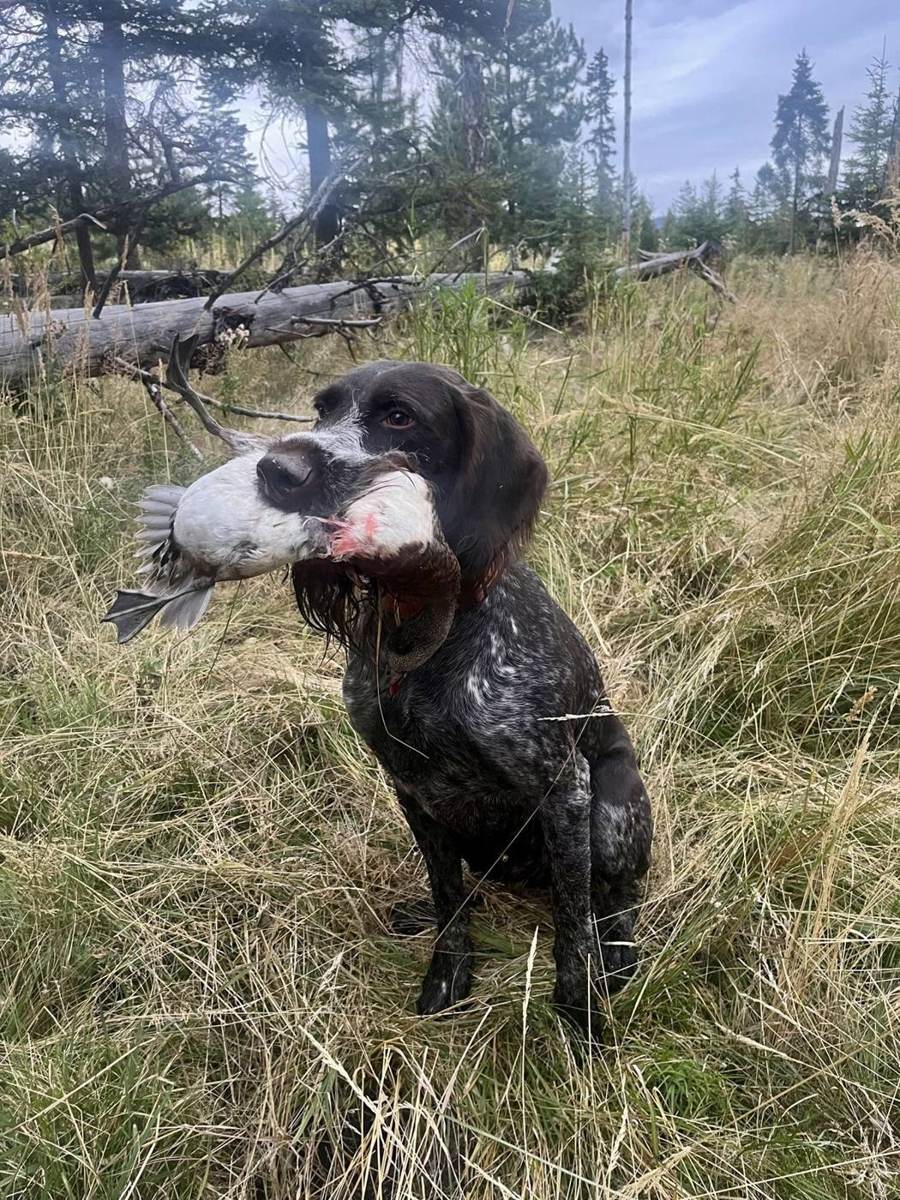
Picture a single day in Germany, the way I've actually hunted these dogs. Morning on a driven hunt, the dog working cover and pushing wild boar. Then a wounded animal needs tracking — the same dog switches to a blood trail, follows it, and finishes the job. By evening you're standing at the duck flight with friends, and that same dog is in cold water bringing back ducks. Three completely different disciplines. One dog. No second dog in the truck, no swapping, no "that's not what he does."
That's the range a JGHV-tested dog is bred and trained for: pointing, retrieving on land and water, blood tracking and finishing wounded game, working fur, holding steady on a driven hunt. The dog doesn't just do these things — it knows which one the moment calls for and shifts into it.
Stamina is part of the breeding.
There's a flip side worth being honest about: a dog built to work dawn to dusk across three disciplines is not a dog you tire out easily. The drive and the endurance that make it brilliant in the field are the same traits that make it a handful for someone who isn't ready to work it. That's by design, not by accident — and it's exactly why these dogs belong with hunters, not in a quiet living room. More on that honesty here →
Why the Drahthaar earns its place in Canada.
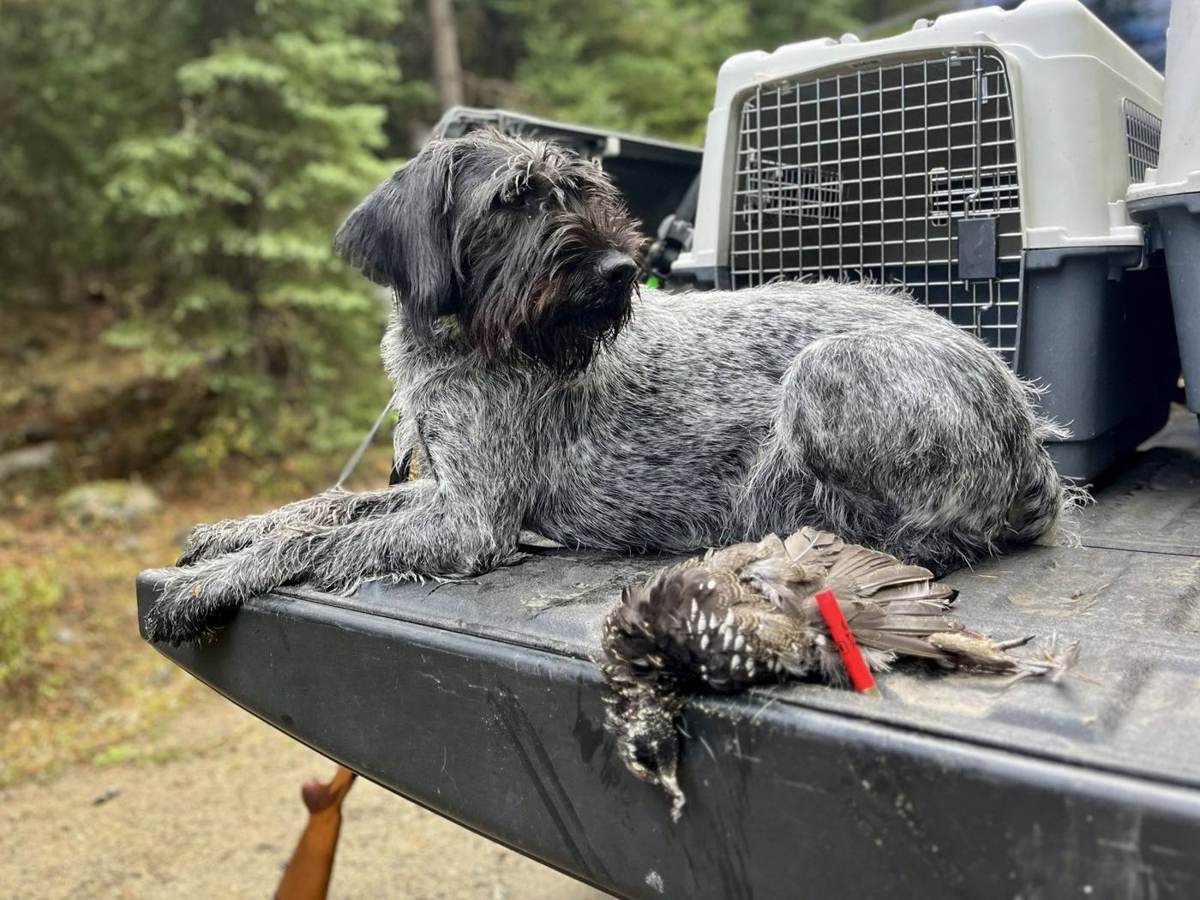
The Deutsch Drahthaar has proven itself here for a specific reason: the coat. That wiry, weather-hard jacket makes it more cold-resistant than a shorthaired dog — and cold water and hard weather are exactly what a Canadian hunting season throws at you. The same all-in-one workday translates straight across the Atlantic. A morning at the duck flight, then onto pheasant or grouse, and the dog is still ready to run a blood track or finish a wounded coyote whenever the day demands it.
That's the case for a versatile dog in the Okanagan: one animal, weather-tough, that covers waterfowl, upland, tracking, and fur — instead of a kennel full of specialists. For a hunter who does a bit of everything, there's no better fit.